Skip to Main Content

The University of Tennessee

The Graduate School of Medicine


Conformational Diseases and Therapeutics Research Laboratory

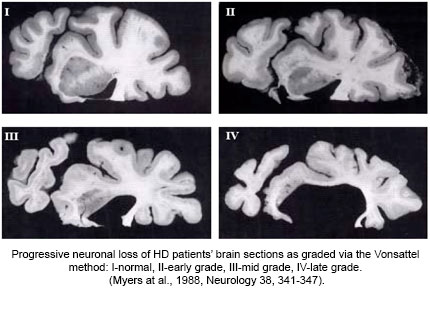
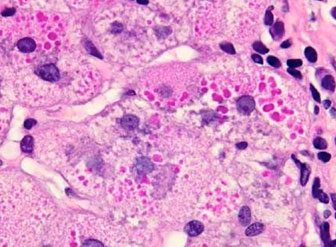
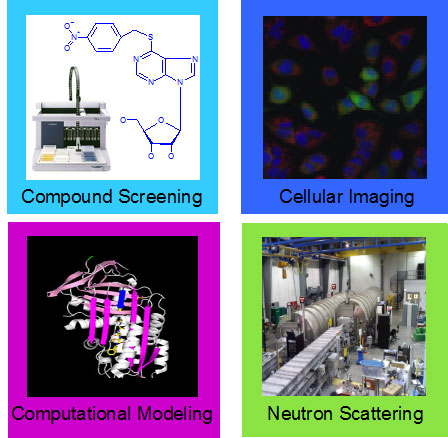
The Conformational Diseases and Therapeutics Research Lab works on understanding the mechanism(s) of protein folding and misfolding, and to decipher how these processes are related to normal physiology and disease using chemical, biophysical and cell biology approaches.  We are currently focusing on two amyloid like diseases, Huntington’s disease and Occulopharyngeal Muscular Dystrophy, where we are studying the aggregation phenomena and using high-throughput screening assays to identify small molecules as potential leads to therapeutics.

In the News

Frontiers Magazine Highlights Work of Researchers

The April 2010 issue of Frontiers Magazine explores UTGSM Researchers in an article entitled: Leading the World in Amyloid Research.


University of Tennessee Scientists’ Medical Research Patents Demonstrate Advances in Neurological Disorders and Nuclear Medicine

Two researchers at the University of Tennessee Graduate School of Medicine, Knoxville, received patents from the U.S. Patent and Trademark Office (USPTO) for medical research that will improve the study of and search for cure for Huntington’s and other neurological disorders and will improve methods for using radioisotopes in nuclear medicine.

Valerie Berthelier, PhD, Assistant Professor and Director of the Conformational Diseases and Therapeutics Research lab, UT Graduate School of Medicine, developed new methods to study particular inherited neurological disorders, including Huntington’s disease. The invention will help researchers analyze specific proteins known to be associated with these devastating disorders and could lead to the development of new treatments or cures. Analogously to the situation in Alzheimer’s disease, in Huntington’s disease and seven other polyglutamine disorders, the disease protein forms insoluble protein aggregates that are toxic to neurons.

“Due to this development, we were able to identify a small number of promising compounds that affect protein aggregate formation,” said Dr. Berthelier.

George Kabalka, PhD, Robert H. Cole Distinguished Professor of Neuroscience, Director of Basic Science Research Department of Radiology, UT Graduate School of Medicine, received a patent for new methods for incorporating short-lived radioisotopes in molecules of use in nuclear medicine and biology.  Short-lived radioisotopes are required by new nuclear medicine imaging techniques, such as positron emission tomography and single photon tomography.

“The methods described in the patent offer entirely new approaches to preparing radiopharmaceuticals for use in nuclear medicine imaging.  The advantages of the new methodology are that the pharmaceutical precursors have shelf lives of years and can be used in radiopharmacy ‘kits’ that provide for simple purification of the final pharmaceutical product,” said Dr. Kabalka.

Patents are awarded for unique technologies and ideas and serve to protect inventions that can benefit society. The process for receiving a patent is lengthy and difficult:  fewer than 10 percent of the discoveries made at the University of Tennessee are eventually granted patents from the USPTO.

“The success of our researchers is an attestation to how seriously we take our commitment to serving our community,” said James J. Neutens, PhD, Dean, UT Graduate School of Medicine. “Through education of physicians and research to improve medical care, we impact the healthcare of our region, state and nation.”

Berthelier and Kabalka are among 20 Knoxville-area UT researchers who were honored recently by the UT Research Foundation (UTRF) for receiving patents from the USPTO on discoveries that could transform the lives of people in Tennessee and the nation.  The researchers achieved a total of 15 patents for their intellectual properties over the course of 2007 and 2008.

UTRF President and CEO Fred Tompkins said the scientists responsible for the research that makes it through this process are among the most innovative and dedicated individuals in the university system. “Awarded patents are an indication of the innovative people and programs at the university,” Tompkins said.

Not only do patents benefit the university through external funding, but they also have the potential to stimulate economic development through the generation of licensing revenues, which can be the basis for starting new companies. 

The remaining scientists who were honored include 11 researchers from UT Knoxville and seven researchers from the UT Institute of Agriculture (UTIA).

The University of Tennessee Graduate School of Medicine in Knoxville is part of the University of Tennessee Health Science Center, the statewide academic health system.  The school is home to more than 200 teaching physicians and researchers; more than 190 medical and dental resident physicians in 11 residency and 12 fellowship programs; and more than 180 volunteer faculty physicians and dentists.  The school, together with clinical partner University Health System Inc., form the University of Tennessee Medical Center, the only academic medical center in the area.


The University of Tennessee Graduate School of Medicine

Conformational Diseases
and Therapeutics Research
Department of Medicine - R302
1924 Alcoa Highway
Knoxville, TN 37920

Tel: (865)305-8987
Fax: (865) 305-9460